Tag Archives: Featured

Lowest Recorded Temperature

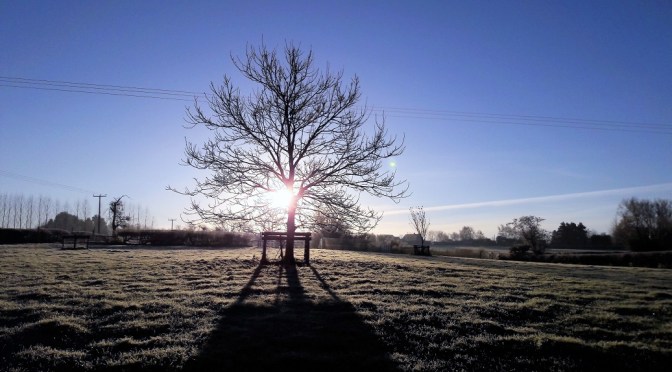
november-frostUpdate: 12 Dec 2017 07:21 -11.4C (11.4F)  far too cold to take photos! I remember my hand freezing to a metal gate, fortunately I was wearing gloves.  Keeping the water liquid for the hens was a every hour on the hour task as it refroze so quickly.  We had a run of 12 days where the temperature fell below freezing.

Previous Low: 30 Nov 2016 06:63 -7.5C (18.5F)
This morning 30 November 2016 at 06:38 we recorded our lowest all time temperature -7.5C (18.5F), I’ve only been recording the weather stats since November 2013 so maybe it’s not that dramatic.  Having said that last year, 2015, the lowest temp was only -5C on the 20th Jan 2015 and in 2014 it got down to -6.7C on 30 Dec 2014 when we had almost two weeks of really cold weather over Christmas and into New Year.
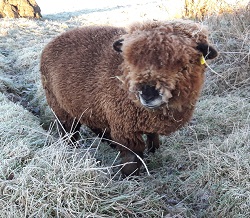
wispToday is the third cold day in a row, we’ve been out first thing each morning and throughout the day breaking the ice on all the troughs and drinkers for the pigs, sheep and hens.Wisp doesn’t seem too perturbed she still can running over for a fuss.

The upside is that the sun is out and with not a cloud in the sky it great to be outside and then rush back into the kitchen to sit on the Rayburn when you’re frozen to the core.

The cold weather has slowed up the mole invasion, I guess the ground is so hard it’s not as easy to dig through. In the last few weeks there must be upwards of a hundred mole hills in Kiwi’s field, it’s looking more like a battlefield than pasture.
No. 7, I think

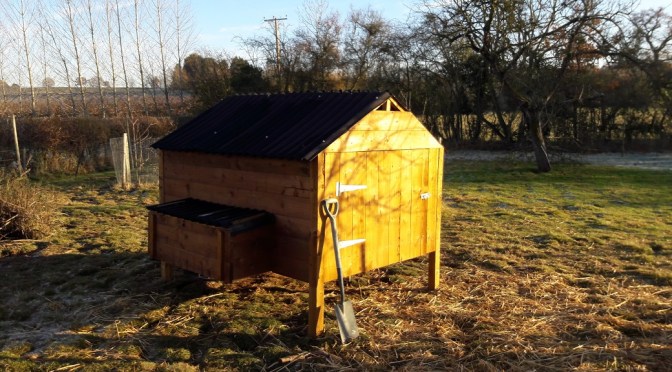
Over the years as the number of hens increased I’ve built hen houses to accommodate them, after all how hard can it be to knock up a hen house? The latest is n0 7, I think. The early ones were built from plywood and you wouldn’t describe them as pretty. They were designed to make best use of a sheet of ply. In fact one of our friends nick named number 2 the “sub station” after I painted it light blue.

The design improved, no 3 was an un-intentional  homage to L S Lowry, in that it’s tall and thin. Next I moved away from plywood to tongue and groove mainly because exterior ply seems to delaminate in no time at all these days. No 3 was a beauty, looks like a Swiss chalet with a tongue and groove roof as well as walls. Probably the prettiest to date, but chuffing heavy though. The side with the nest box, can be completely removed just lifting a couple of hooks, which is perfect for getting in and mucking out. Unfortunately it’s too heavy for Amanda to remove on her own, that plus the fact that I couldn’t find any tanilised tongue and groove and it’s expensive meant nos 4 and 5 used feather edge planking.

At this point I was building the houses in sections, sort of flat pack style, and then screwing them to 3×3 or 4×4 inch posts. Which meant I could assemble them in situ and the legs were built in from the beginning. I had to build them in situ as they were getting too heavy to move on a sack trolley.

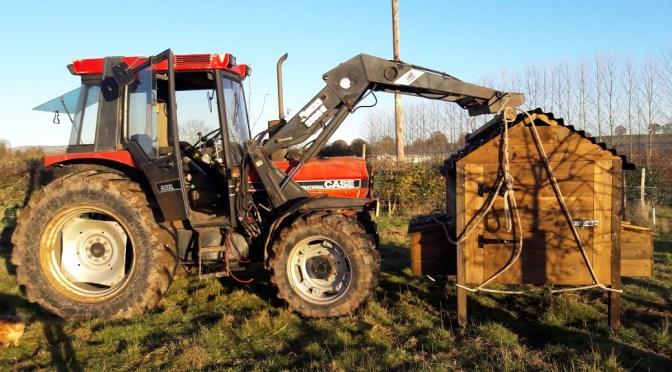
The problem with feather edge is that the thin edge splits easily and you end up have to pilot drill all the planks, nightmare, takes forever. No 6 ,my best to date, uses inch planking it ridiculously strong measures 2000mm x 1400 x 1200mm high and probably weights 200Kg. Now 6 months ago that would have been a major problem, not now, a Case 885 with four wheel drive and a loader solved that problem.

No 6 is our biggest hen house, I was under the cosh to finish before the new batch of 25 hybrids turned up. Now it might sound silly now but I hadn’t measured the width of the gate into the Chicken run. Fortunately I didn’t have to admit it as it just fitted in with maybe a couple of inches spare on each side.

Why no 7, good question, nos 2 and 3 are on their last legs and I thought I’d build no 7 before I forgot all the small but important tweaks I’d made to no 6. No 7 is slightly smaller 1900 x 1300. It probably should be 1800 x 1220 to make best use of a sheet of ply which I use for the floor but maybe no 8 will get that modification!  I also improved the nest box lids, as they tended to break off on the earlier models.


The Grunters are back

After our sows had to go, one was old and her replacement didn’t come back into season,  we were undecided if we should have any more pigs. Why? Well they are a tie as they need feeding twice a day and access to clean water, second they trash the fields. However on the upside everyone, including us, loves our sausages and pork.

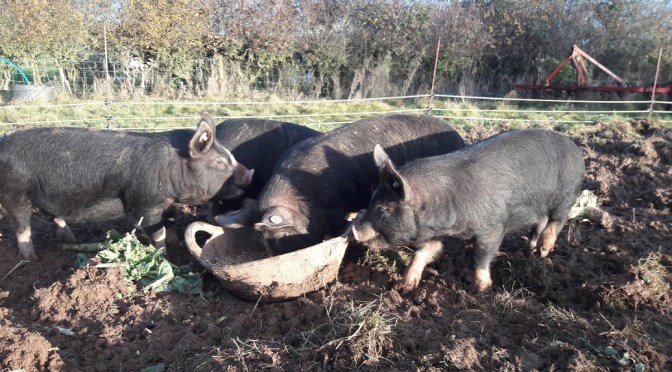
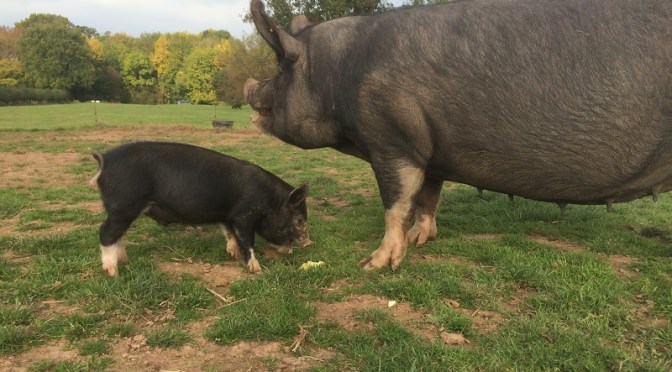
After two months without any pigs we decided we missed having them around so we’ve got a few weaners to keep us in pork and tide us over until we’ve decided what we’re doing. The Berkshire is a great breed, docile, we’ve had very little problems rearing them and best of all the meat is superb. We’ve had a couple of Oxford Sandy & Black(OSB)  Berkshire crosses several years back which we took to bacon weight, and I quite fancy the Large Black. The dilemma is with the Berkshire being so good why change? Maybe we’ll try a few weaners of each before we commit ourselves to any breeding sows; it’s all down to flavour.

The batch in the photo were 8 weeks when we got them and very flighty, not surprisingly as this was their first time away from Mum. We thought we had it covered by letting them out of the Land Rover directly into their run but they bolted straight through the electric fencing, the electric didn’t stop them, if anything it spurred them on. Off they went  into a ditch, ran along it for 50 yards and then into the hedge.  You might not know but pigs unlike other livestock are not easy to herd.  I managed to get in front of them and over about 30 minutes we managed to get them back to their paddock.  Four weeks on they are still flighty, but settled in and used to us, to the point where we can tickle them behind their ears. Yep it’s great to have the pigs back at Dumblehole.

Open and shut Case

The Massey 35 is fantastic, it’s light so doesn’t cut the fields up, plenty powerful, it even runs the New Holland 276 baler. However sometimes you need to pick things up, e.g. hen houses, pig arks and cord wood to name three. Even with a set of forks on the 3 point linkage it just doesn’t work.

The answer is a loader and ideally a loader with four wheel drive. I was struggling to justify buying a 4wd with a loader just to pick up a few bits of wood and the odd hen house.

OLYMPUS DIGITAL CAMERA

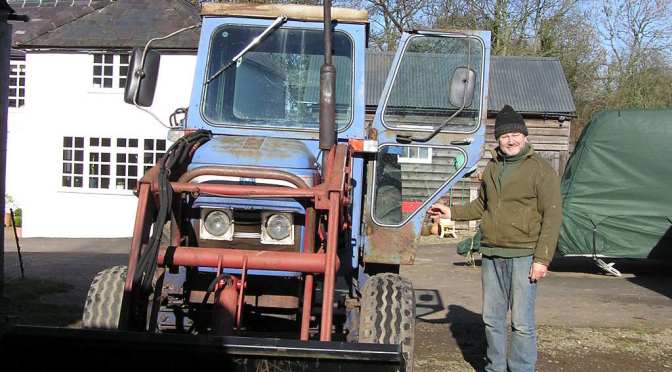
I tried a 2wd Leyland(not my favourite tractor anyway) and with only a light pig ark on the loader the back wheels slipped.All the weight was over the front axle absolutely no use at all. It took me best part of 2 hours to get the Leyland back out and the field is full of ruts.

Back in April/May I found a Case IH 885 XL for reasonable money and in pretty good nick. The 885 is probably one of the last tractors to be built before everything went electric & computer crazy so I should be able to mend anything that breaks. The 885 has 4wd, the loader works, more than enough power and came with a grab so I can pick up the cord wood.

How many tractors do you need?

Well, there are certain heavy jobs that need to get done around Dumblehole; moving plywood pig arks, moving cord word for chopping and picking up large bales of straw. Unfortunately the Massey is brilliant but not always large enough to do everything.  So Mike has been looking for a larger tractor and has found an old Leyland which might suit us very well.  There was a little hiccup when Mike went out to move the pig ark as it’s so very wet and muddy it did get stuck.  After about an hours’ digging Mike managed to free it and so it’s now on the drive waiting for some (lots) of dry weather before we try again.

From 6 to 22 in 36 hours

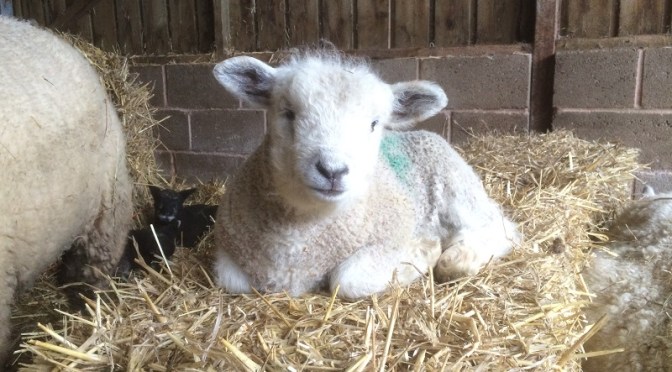
TrillianOn Sunday night we had 6 lambs all was progressing well. Working off the tup date we were expecting the bulk of the ewes to lamb during the week. What we didn’t expect was 8 ewes to lamb in 36 hours! Hattie was the start off at 03:30 on Monday morning. She looked like she could lamb at any moment, and having lost two lambs earlier in the week, we were checking Hattie every half hour. QuattroBy 06:30 she’d been straining for 30 mins but nothing showing, on investigation I found 4 front feet and no heads. After a bit of rummaging around and help from Jackie we got two lambs both fit and well. Just as that was over both Sally and Snowflake started to lamb. Amanda was looking after Snowflake and I had Sally. Both needed some help, both had twins. Not long after Ebony had triplets. Triplets aren’t ideal as the ewe can only rear 2 lambs so the choice is take one away and either foster it or bottle feed. The other choice is to bottle feed all three.

LolaTuesday 03:00 it started all over again with Rosie who had twins. Unfortunately she had no milk so that’s another set of twins to bottle feed. The maternity was rapidly filling up! Later that morning Jet started. It’s her first lambing and she’s quite small, although she needed a little help, the twins are fine. Jet doesn’t have much milk either so another set of twins that need a top up bottle. That’s 7 that need a bottle every few hours.

The other girls lambed at rather more sensible time of day.

Autumn’s Here

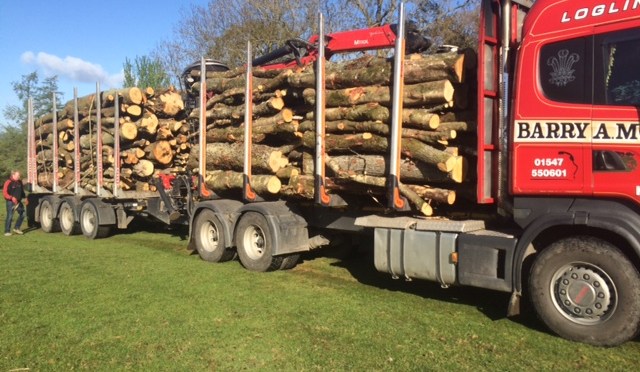
With the chilly mornings we’ve got the Rayburn up and running. It’s not the most efficient piece of kit but it makes it really cosy in the kitchen. However with the Rayburn and a wood burner  we go through wood at a fair rate of knots.  Back in April I ordered in a ‘little’ firewood for the winter. Rather than buying it already cut and split I thought I’d do it myself as I need the exercise and ‘how hard can it be’.   The photo is 25 tons of tree trunks but I’ve got a great Tanaka chainsaw. Progress has been good if a little erratic, fortunately some friends came to stay. They worked like Trojans spending a full day splitting and barrowing, I think we processed about 5 tons. Thanks Tony, Ali, Victoria and Harry.

There’s probably about 5-6 tons to go but that can wait until next year when I’ve enlisted some other volunteers or should that read victims. Hopefully there’s enough in the wood store for the winter!

We’re on Orange

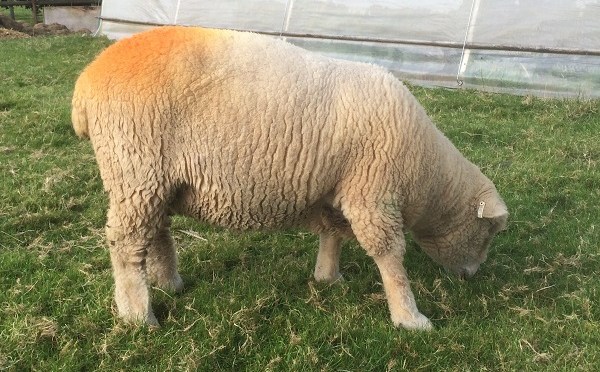
The tups have been in for 17 days and it’s time to change the raddle colour, why? The ewe’s cycle is approximately 17 days so by changing the colour we can see who hasn’t taken the first time they were tupped.

Yellow was the first colour we used and Orange covers the yellow as you can see. Hopefully we won’t have too many second timers, otherwise lambing will go on for longer.

Kiwi Update

Things are not going to plan, the idea was that Sultana would be our replacement sow as Kiwi is getting on and this will be her last litter.  I’m already talking about Sultana in the past tense, she had one litter earlier this year but hasn’t come into season since despite spending 8 weeks with the boar. So she has had to go, on the upside as she was young we had 175kg of very nice sausages. I think we’ll have to have a village BBQ.

Kiwi farrowed 23rd August but only 1 piglet which is a real shame for her last litter. However mum and son are in separable. It’s like there’s  3 foot of  bungie cord connecting them. They both seem quite content and Kiwi is hoovering up all the fallen apples.

Show Season 2015

Kington2015
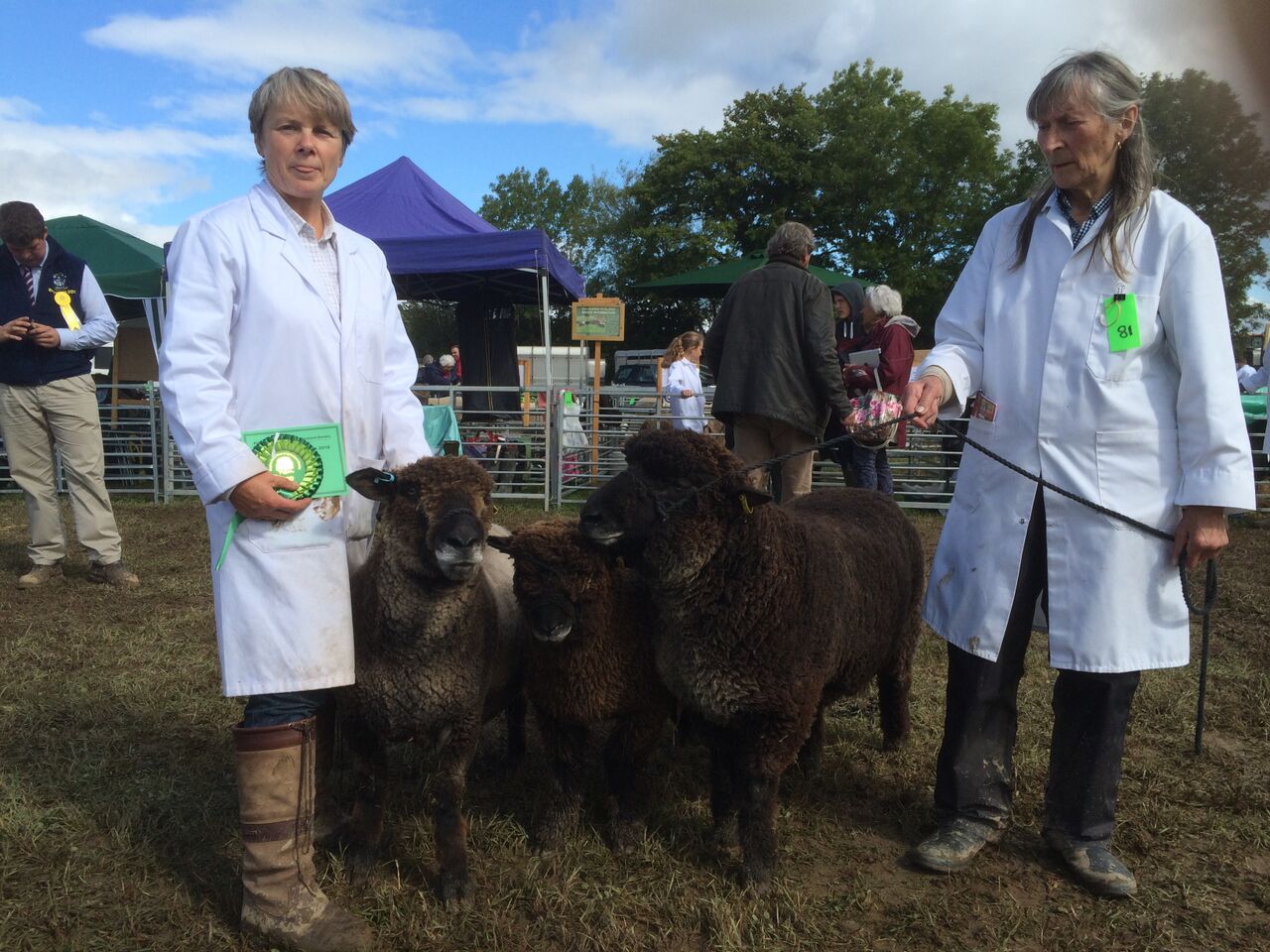
4th at Kington 2015

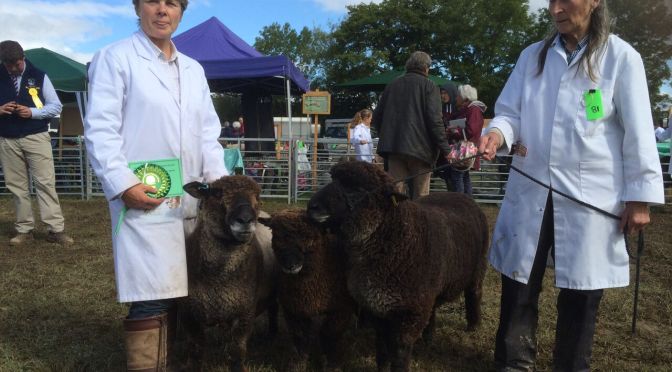
Well, this year we decided to try our hand at showing sheep. Firstly thank you to all those Ryeland members who have helped out with advice (go to Bromyard before you show at Burwarton), trimming (quite an art) and feet (don’t leave them!).  We took our Coloured shearling ram to Bromyard (4th) and Burwarton (4th) and  a trio of ram, ram lamb and ewe to Kington another 4th.

OLYMPUS DIGITAL CAMERA
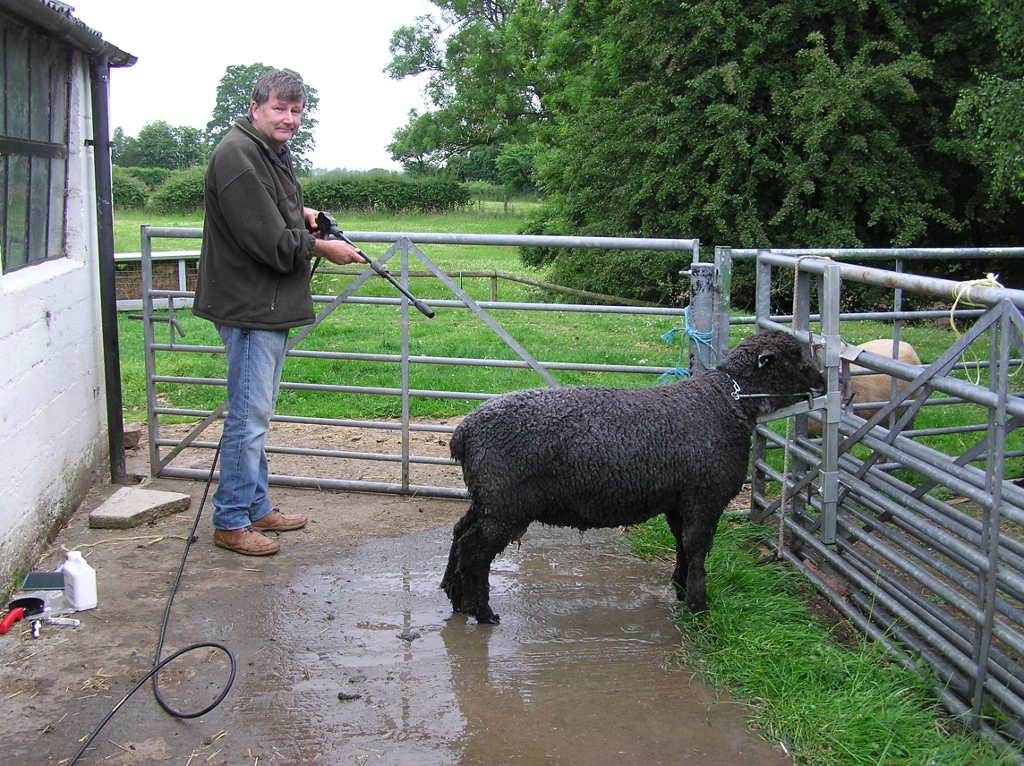
Ubie and the jet wash: He looked much better afterwards.

It’s been fun getting involved in the shows, but there is quite a lot of preparation, not least making sure you shear at the right time and we nearly missed it this year. Next year we will be more prepared.  I’m not sure the sheep enjoy all the preparation, especially the jet wash bit. But they did seem to enjoy going to the shows.