Tag Archives: Featured

Dumblehole Salami

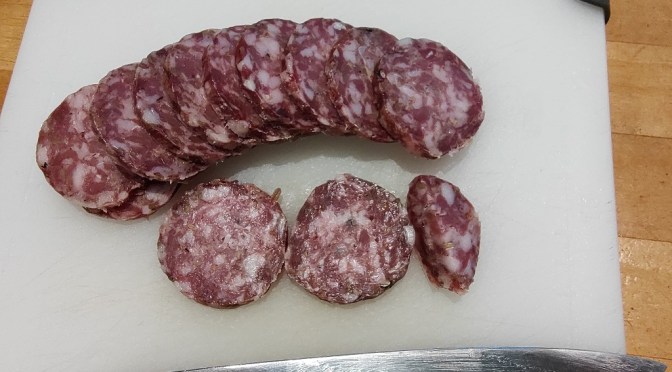
I’ve made salami for several years on and off using different recipes. This year I’ve made Finocchiona which is a fennel salami, quite soft and the lactic acid gives it a tangy acidic taste. It’s gone down well in the village, I’m making a batch every couple of months.

The summer was a challenge with it being so hot, normally I have to heat the salamis to keep the temperature up during the fermentation. This summer I had to get them cooled down. Cold blocks weren’t making a difference and I had to quickly cannibalise an old fridge/freezer that we had in the shed. I always planned to use it as a salami cabinet but just hadn’t got around to it, the heat spurred me on!

Tammy caught us out as well

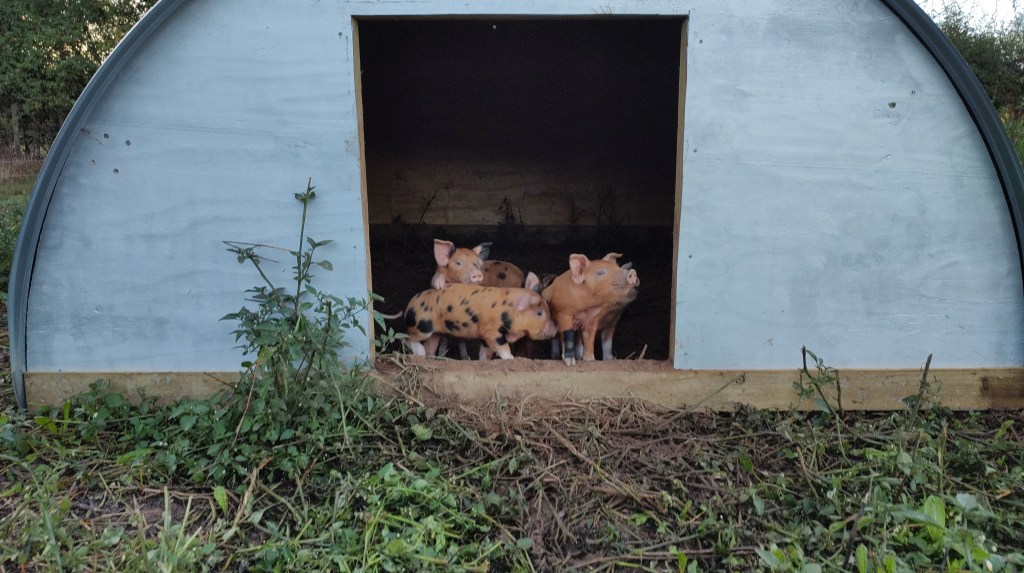
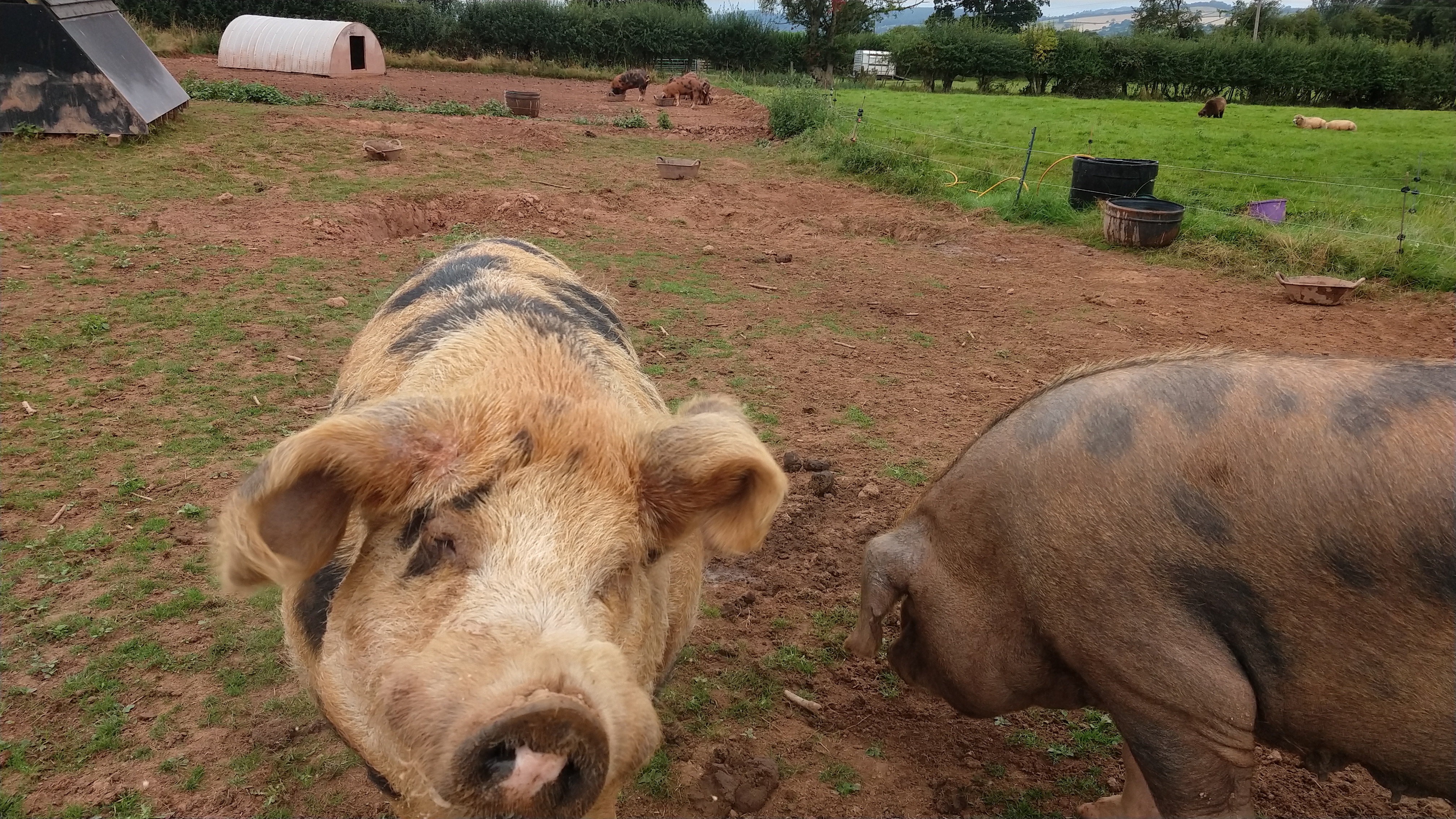
Rose caught us out on Monday and today Tammy did as well. She farrowed in the field with Twinkletoes alongside her keeping her company. Twinkletoes wasn’t really in the way but he is big and piglets are very small, so lured by food we moved him out to a new paddock.

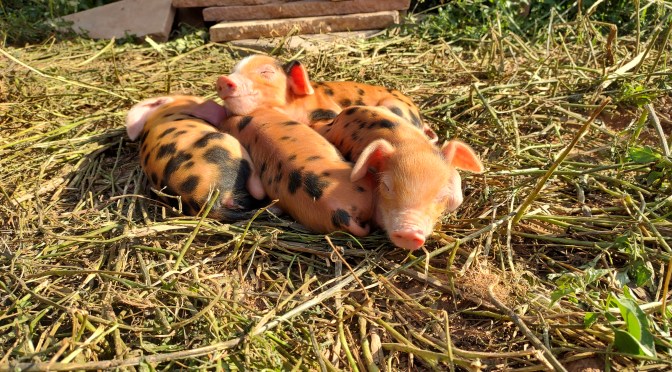
Tammy lost two straight away but the remaining 6 are all doing well happily sunning themselves in the September sunshine. Mind you their first night was quite chilly and Tammy kept them out all night. She must be quite sensible as the first night it rained she took them inside the ark.

Rosie has a new litter

We’re weren’t sure if both Tammy and Rosie were in pig but over the last couple of weeks it was obvious. I thought I had more time to move arks and set up a new paddock for Twinkletoes (the boar) but Rosie caught me out and had started to farrow when I went down on Monday afternoon.

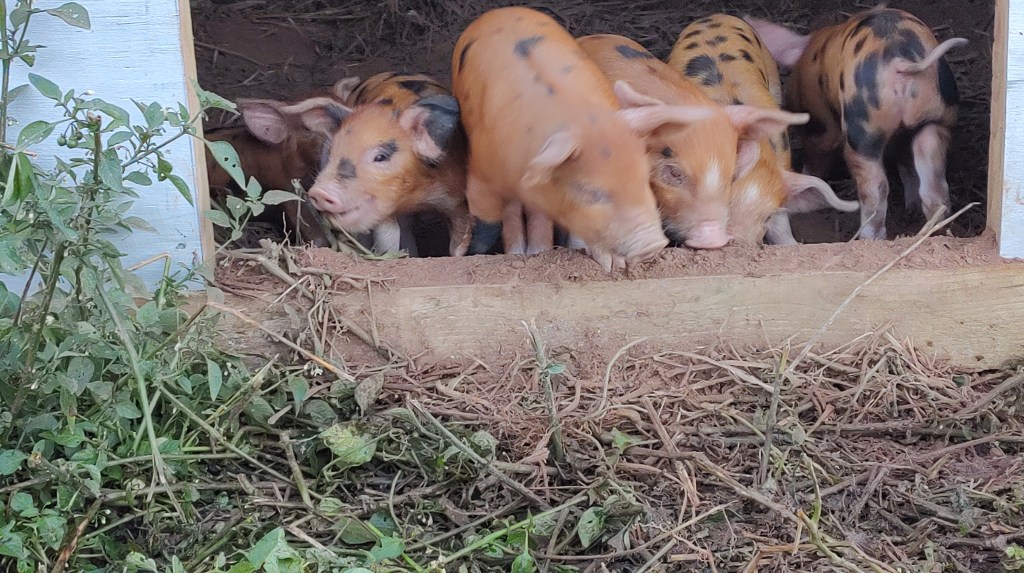
Bit of a rush but we moved Twinkletoes and Tammy to a new paddock and left Rosie where she was. Happily she’s had 8 piglets all healthy and doing well.

Wot no Grass

2022 has been an incredibly dry year for us, the brook was completely dry for weeks and the grass stopped growing. Being on clay it took a while before the ground was done dry, however in July we had to give the sheep hay and the ewes needed concentrates as well.

We gave the lambs about three times the normal acreage which meant they had enough grass to keep them going, just. We don’t creep feed, my view is that purely grass fed lamb has better flavour and is less fatty.

By way of contrast in February we had too much rain lol

OSBs arrive at Dumblehole

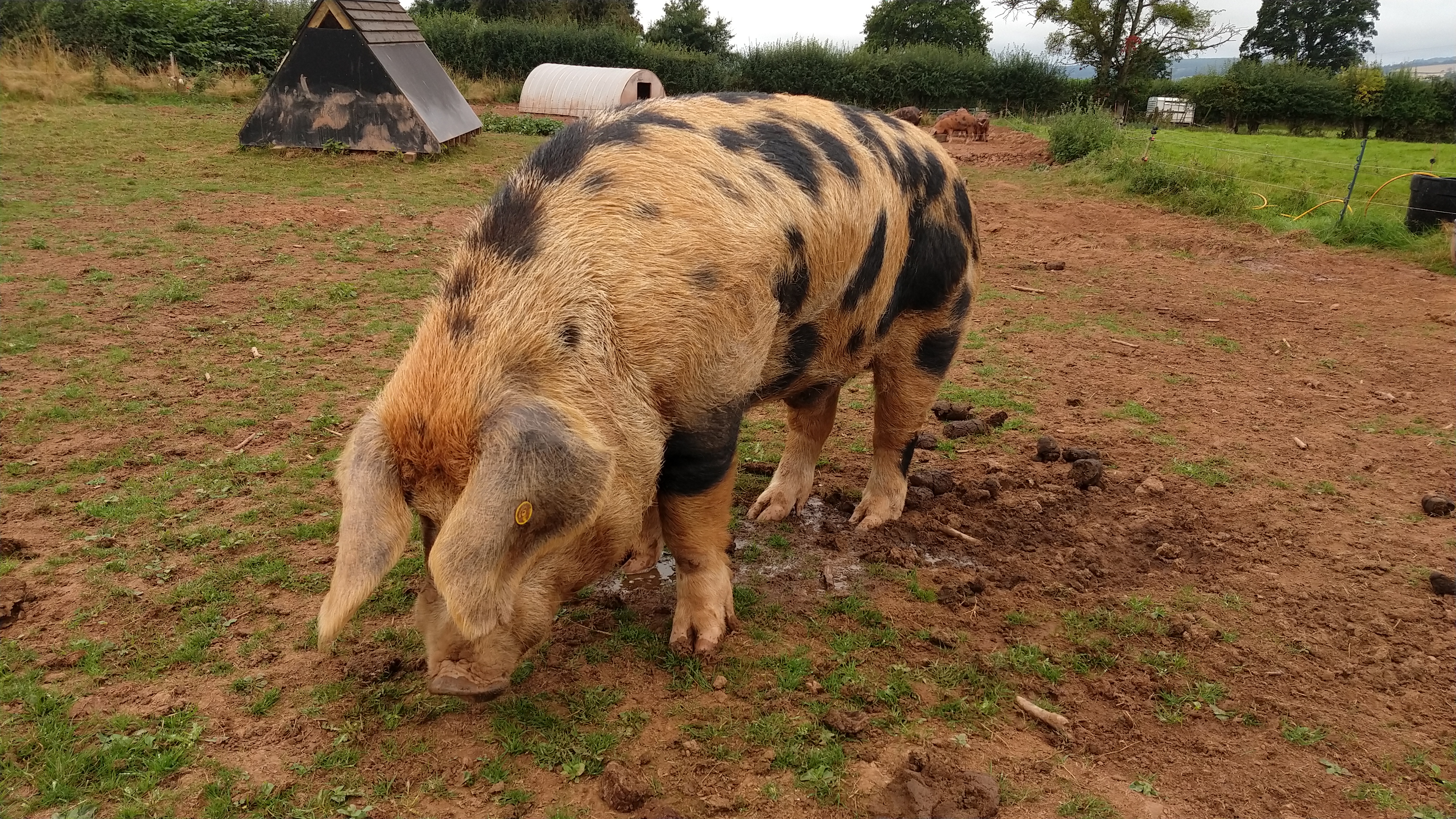
Having had Berkshire pigs for years we decided we would move to Oxford Sandy and Blacks (OSB), not that we didn’t like the Berkshires anymore just that they are a Pork pig which means that all pigs in the litter would have to go at about 6 months. We wanted to send a couple of pigs a month to the butcher and this is where the OSBs come it. With the OSBs they don’t lay down fat as quickly as the Berkshires and can carry through to 12 months.

This March we picked up a trio, 2 sows, Tammy and Rosie, and a boar, Jack. The OSBs are a rare breed and Rossie is from the Sybil line which is uncommon within the OSBs so hopefully we can do our bit to keep the bloodline going.

Rosie was close to farrowing when we got her and 3 weeks later she farrowed. Two of the gilts, Spot and Patch, were good enough to register and we’ll breed from them when they’re about a year old.

Plum Pudding Pigs

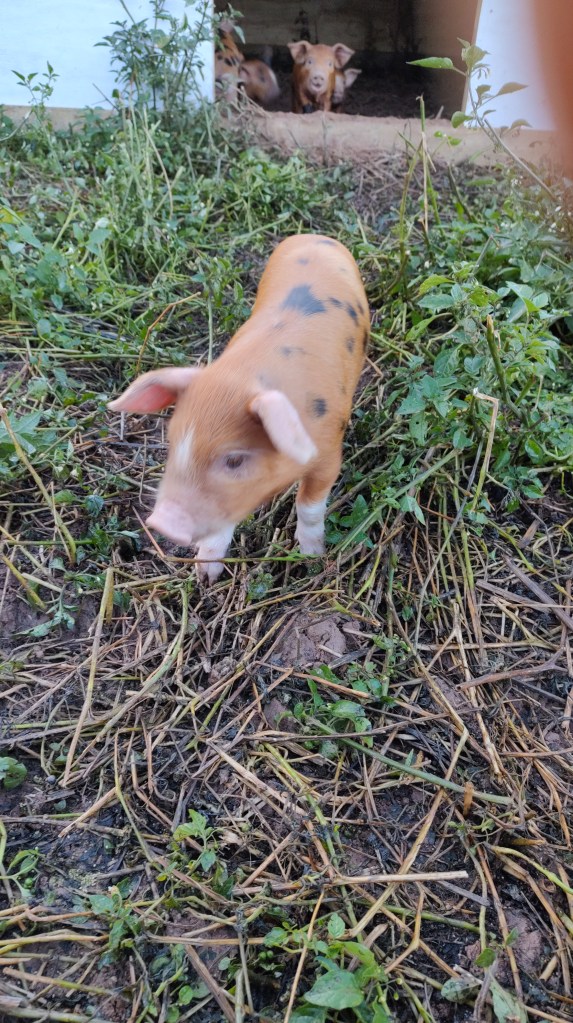
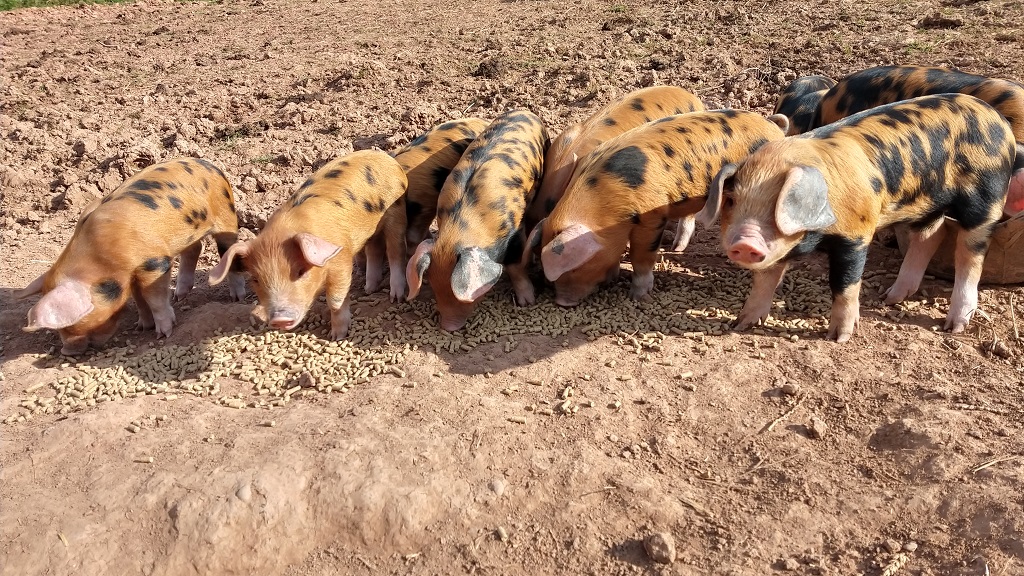
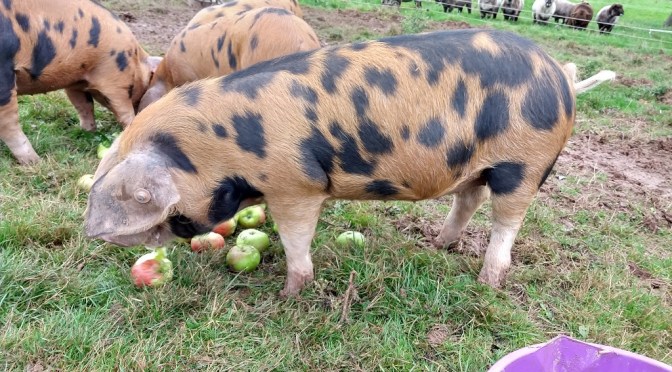
Officially they are Oxford Sandy & Black pigs but were commonly called Plum Pudding pigs. We had a couple of OSB Berkshire crosses in the past and thought we’d try a few pedigree weaners with a view on keeping two gilts back as breed stock if we get on with them. They are growing much quicker than the Berkshires which isn’t surprising as the OSB is a much larger breed. They just 16 weeks old in the photos and love apples. Along with their usual rations they’re getting a bucket of Bramley cookers as well.

Like the Berkshire the OSB is one of Britain’s old pig breeds and has been around 2-300 hundred years originating in Oxfordshire although the exact history has been lost. The breed reached crisis point at least twice in it’s past when numbers dropped so low that extinction was a real possibility.  It down to a few determined breeders that kept the breed going so that it still exists today. If you’re interested in the history take a look at the breed web site.

“Doer Upper”

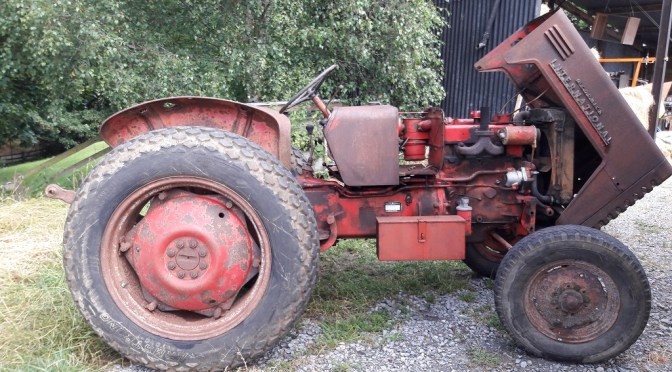
This is an International B250, it’s  had 3 previous owners the first being a Herefordshire small holder. For the last 5 years it’s been sat in a shed. Mechanically it’s in pretty good shape and fired up pretty straight away. It’s not been restored and hence has almost all the original parts.

The International B250 was built by the International Harvester Company of GB Ltd, at the Bradford works,England. The Bradford works was formerly the Jowett cars and van factory and also built the Bristol crawlers for a period.

The B-250 was introduced at the 1955 Royal Smithfield show and continued in production until 1961.  From the serial number this one came off the production line in 1958.In all just over 30,000 were built unlike the Massey 35 where almost 400,000 were produced.

The B250 has a 30HP 4 cylinder indirect diesel engine, with glow plugs. There’s an indicator on the dashboard to show when the glow plugs are hot. Apparently it’s a notoriously difficult starter.

The brakes are quite unusual as you’ll see from the photos, not only are they disc brakes they’re mounted  on their own drive shafts as opposed to the axle. They didn’t work at all before I stripped them down but they OK now.

Winter’s fuel

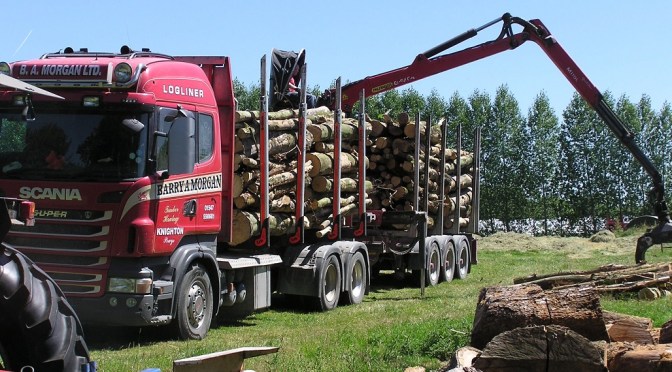
Heating Dumblehole isn’t a matter of turning up the thermostat, the oil central heating just can’t cope even if it’s on 24 hours a day. What seems to work is to have the wood burning Rayburn in the kitchen and the ClearView log burner at the other end of the house fired up. Between the two of them it keeps the temperature pleasant, probably cool by most people’s standards. As a consequence we need a lot of firewood and I do mean a lot, the load in the photo will last just over a year! I don’t have a gym membership but I do have a chainsaw and will cut and split the cord wood by hand.

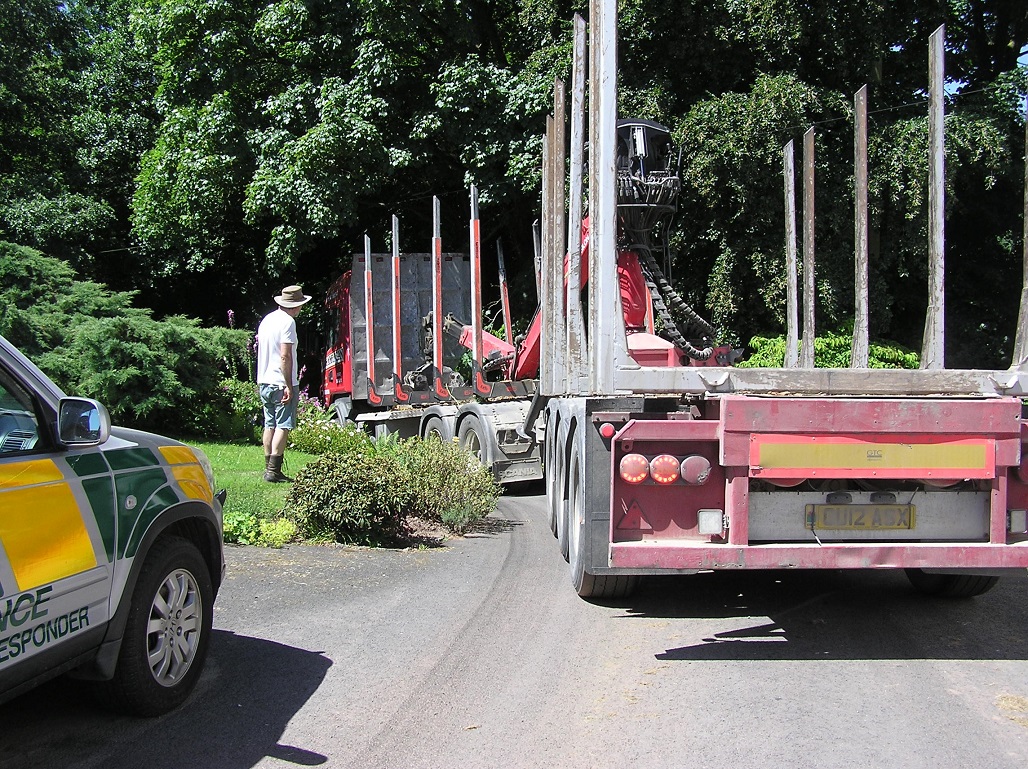
Usually the wood is dropped off in a neighbours field and I have to move it with the loader. This year with the ground being so dry I though we could get the lorry to drop the wood where I need it. Amanda wasn’t convinced but I was pretty sure we’d get the lorry over the bridge and round the corner, it was close!

I'm pretty sure you'll make it
I’m pretty sure you’ll make it


Berkshires are back

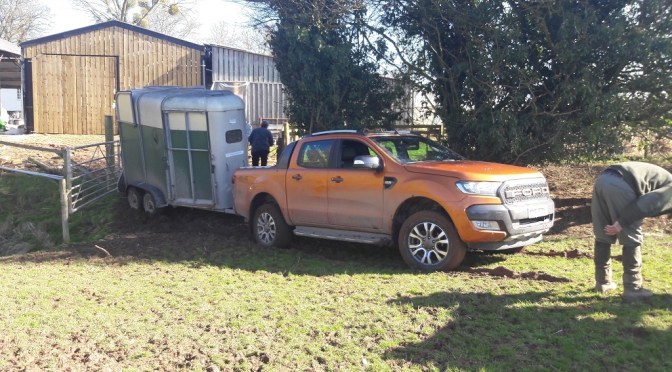
Once the snow was thawed out we could get the weaners. Steve came over as he hadn’t been before and I think we wanted to try out the new pickup. The snow may have gone but the fields were wet and Steve didn’t get as far as he’d hoped.

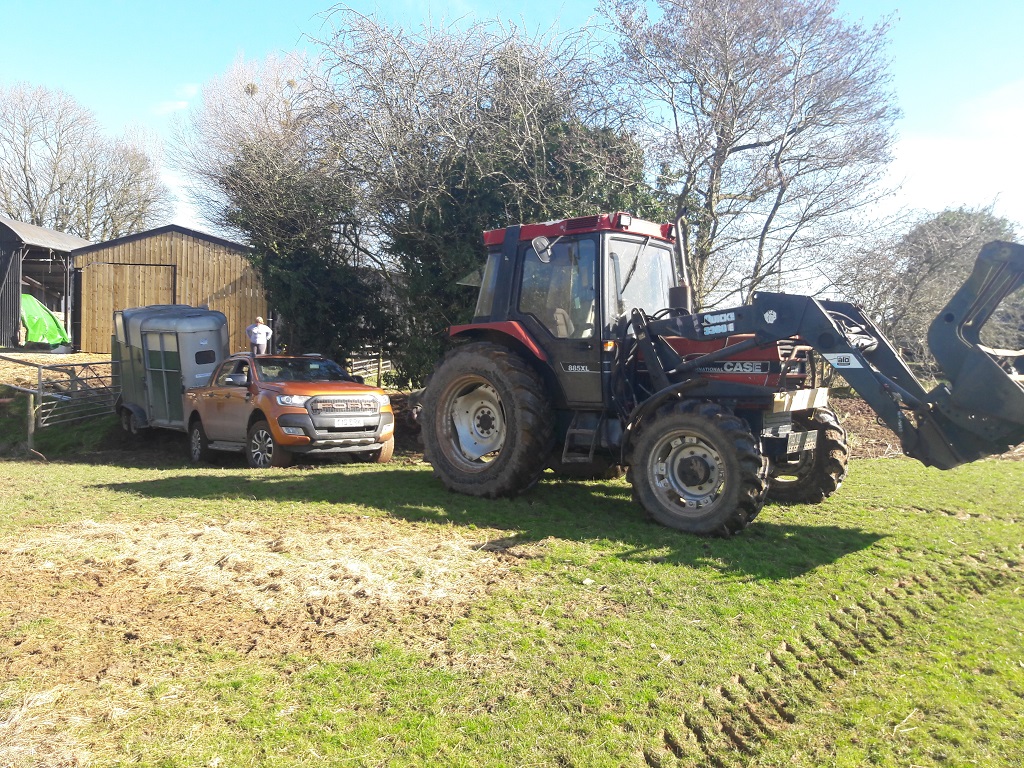
First the back end of the horse box when sideways into the gatepost. We managed to pick it up and straighten things out. The the mud was just too much so the 885 came to help again and towed everything down to the pig arc.

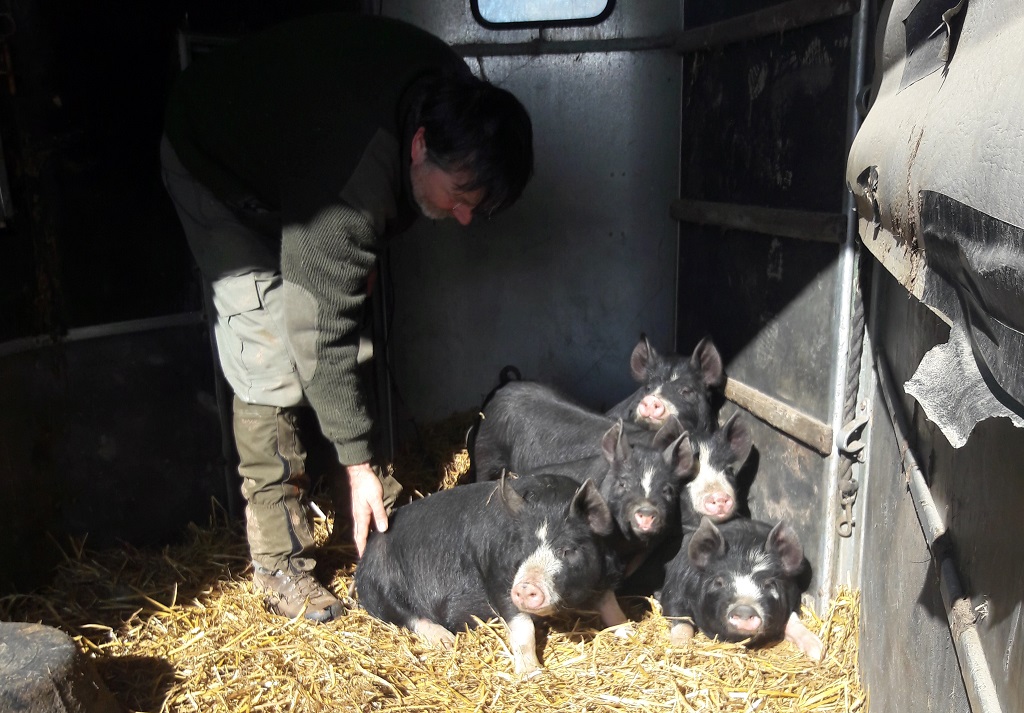
The weaners weren’t too bothered and with a bit of encouragement soon came out to investigate.

Spring Pasture 2018

We lamb late compared to many Ryeland flocks, why? The days are longer, the weather’s warmer and the grass is lush and growing.. err not in 2018 it wasn’t, even in March we still had snow. It was a harsh Winter by our standards with snow in November and more again at the start of 2018. On average we had about a foot of snow but in places where it had drifted we had over 2 feet.

We always feed ad hoc hay and some concentrates for 4 weeks each side of lambing. This season we started feeding the ewes concentrate in November and didn’t stop until late April.

The ewes come in overnight mainly for our convenience, spend 1-2 days when they lamb other than that they are out on the grass. This year everyone was in, and in for days and days. Fortunately we replaced one of our old sheds with a steel framed barn, without it we’d have struggled. I don’t know where we could have sheltered the newborn lambs. The snow was so light and fluffy it was blowing in through the air vents in the roof of the barn, crazy let’s hope 2019 is back to normal.
Having said all of that lambing went well with no mortalities, however the lambing percentage was down. Initially we had nothing but twins and then it switched over and we had nothing but singles. We have no idea why, we used 3 tups, all sheep had the same diet and management regime. The only difference seems to be lambing date, that’s farming I guess!