
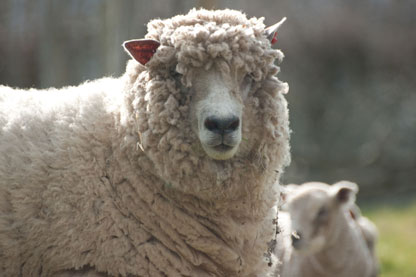
We’ve got two small flocks of sheep; a pedigree flock of Coloured Ryelands and another of the white Ryelands. To retain the pedigree of both flocks means that they need to be kept separate during tupping and a separate ram for each flock. To compound things even further we have ram lambs(or tup lambs) that need to be kept away from the ewes so that they can’t mate with them and ewe lams that need to stay away from all the rams as they are too young to be tupped. To make matters even more complicated I decided that the tup lamb we bought for next season is too good not to use this year on a couple of ewes. All in all 5 groups that need to be kept separate from each other. To compound things we’ve only got four fields so it’s a logistical nightmare as they need to move to new ground when they’ve eaten the pasture down. Much use of temporary fencing to split the fields up.

However it’s all gone smoothly so far. Sam our white Ryeland tupped all the white ewes in the first couple of weeks. A couple of the girls he covered again, hopefully they’ve taken this time, we’ll know in 3 weeks. Sherlock has covered all the Coloured Ryelands bar one, Trillian.
She got her name from the ‘Hitch Hiker’s guide to the Galaxy’ as her tag is T42. Ubi our coloured tup lamb has covered three ewes, our two elders Twiggy (always skinny) and Manx (tail was docked very short) plus Snowflake who we bought at the Ryeland show and sale.
You may be wondering how we know when the ewes have been tupped. Each of the rams has a sticky paste of colouring and oil put on his chest. The colour gets transferred to the ewes back when he tups them. We change the colour every 17 days, which enables us to see if the ewe is tupped again. In th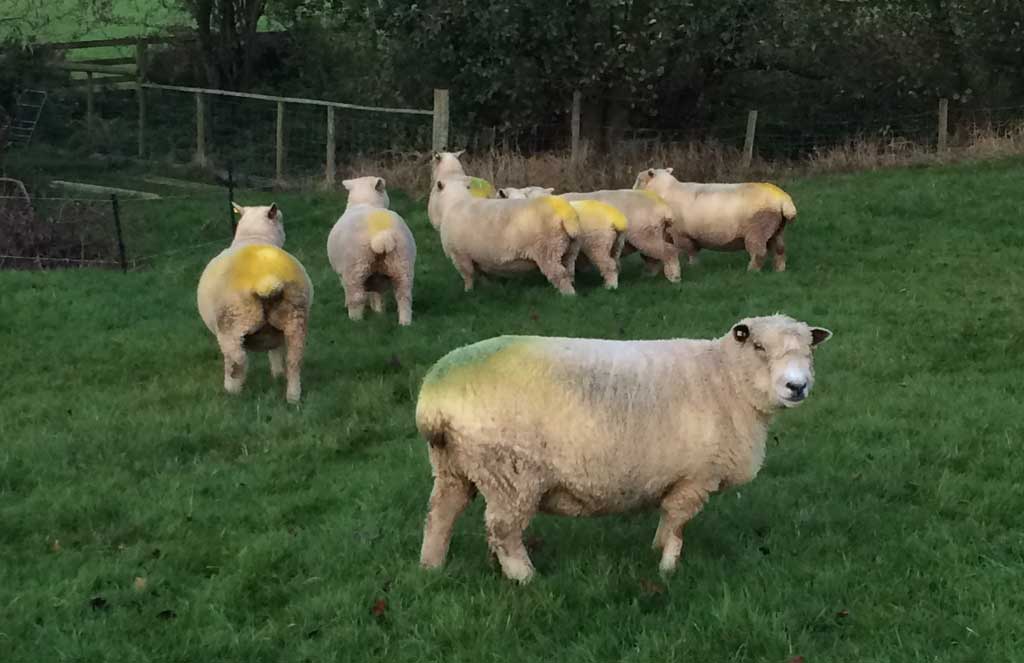 e photo you’ll see most of the ewes have a bright yellow bottom. Yellow was the first colour used. The ewe in the foreground has a greeny coloured bottom, that’s because the second colour used was blue. The last colour we use is red. If they aren’t covered after 3 cycles then it’s not going to happen.
 Dumblehole